
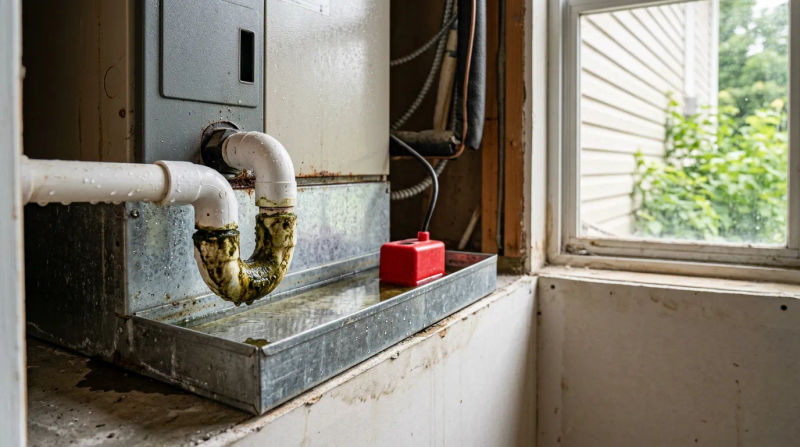
It’s a familiar scenario for many property owners in late August here on Staten Island. Your air conditioner has been working overtime for weeks, fighting off the relentless summer humidity. Then, one day, you notice a mysterious puddle of water on the floor near your furnace or air handler. Or worse, the AC system shuts off entirely, refusing to turn back on. Before you panic, it’s important to know that one of the most common culprits behind these issues, especially at this time of year, is a simple but problematic clog in your system's condensate drain line.
Your AC doesn't just cool the air; it also removes moisture, a process you can really appreciate during our humid summers. This moisture, called condensate, is collected in a drain pan and funneled out of your home through a small pipe, usually made of PVC. When that drain line gets blocked, the water has nowhere to go, leading to a cascade of problems. As a technician with over 15 years of experience, I've seen this exact issue cause everything from minor inconvenience to major property damage.
Common Signs and Symptoms
Recognizing the early AC drain line symptoms is crucial to preventing a small issue from becoming an expensive repair. If you notice any of the following, it’s time to investigate further.
- Water Damage or Puddles: This is the most obvious sign. You might find water pooling around your indoor HVAC unit, which is often located in a basement, attic, or utility closet. In some cases, you may see water stains on the ceiling or walls below the unit, indicating a leak has been happening for some time.
- Musty or Moldy Smells: When water sits stagnant in the drain pan or line, it creates the perfect dark, damp environment for mold and mildew to grow. If you notice a dirty sock or musty smell coming from your air vents when the AC kicks on, it’s a strong indicator of a drainage problem.
- AC System Shuts Down Unexpectedly: Modern HVAC systems are equipped with a safety feature called a condensate overflow float switch. This small device is located in the drain pan or on the drain line itself. If the water level rises too high, the float switch tripping AC system off is its primary job. It's a protective measure to prevent a condensate pan overflowing and causing extensive water damage. While it can be reset, if the underlying clog isn't addressed, the system will just shut off again.
- A Full or Overflowing Condensate Pan: If you can safely access your indoor unit, take a look at the drain pan situated directly beneath it. If you see standing water in the pan, you have a confirmed blockage. A condensate pan overflowing is an emergency that needs immediate attention to stop water from spilling into your home's structure.
- Dripping Noises: Hearing unusual dripping sounds can be another clue. This isn't the normal sound of the system operating but rather a symptom of water escaping from a cracked pan or overflowing from the edges.
- No Water Draining Outside: On a hot, humid day, your AC should be producing a steady drip or small stream of water from the condensate drain line termination point outside your home. If you check this pipe and it's completely dry after the AC has been running for a while, it means the water is backing up somewhere inside.
- Visible Algae or Sludge: Look at the exterior opening of the drain line. If you see a buildup of green or black gunk, it's a clear sign that the same biological growth is likely happening inside the pipe, creating a clogged condensate drain.
What Causes This Problem
Understanding why a condensate drain clogs can help in preventing it. Our technicians find that the causes are usually straightforward and build up over time, which is why they often become critical during periods of heavy use like late summer.
- Algae and Mold Growth: This is by far the most common cause. The combination of water, darkness, and airborne dust particles creates an ideal breeding ground for algae, mold, and fungus inside the PVC drain line. Over time, this biological growth forms a thick, gelatinous sludge that completely blocks the pipe.
- Dirt, Dust, and Debris: If your air filter is dirty or not seated properly, dust and other airborne debris can get pulled into the system. This debris mixes with the condensate, forming a sludge that settles in the drain pan and pipe, eventually causing a blockage.
- Improper Installation: The performance of a drain line is highly dependent on its initial installation. The pipe must have a consistent downward slope (at least 1/4 inch per foot) to allow gravity to do its work. In some of the beautiful, older homes across Staten Island, particularly pre-1940s structures that were retrofitted with central air, we often see complex drain line runs. These longer or more convoluted paths are more prone to clogs if the slope isn't perfectly managed during installation.
- Blockages at the Termination Point: The exterior end of the drain line can become blocked by dirt, mulch, or insect nests, preventing water from exiting and causing it to back up through the entire system.
When to Call a Professional
Some handy homeowners might feel comfortable attempting a DIY fix, such as using a wet/dry vacuum at the exterior drain opening to try and suck the clog out. This can sometimes work for minor blockages located near the end of the pipe. However, there are many situations where calling for professional help is the safest and most effective option.
Call an experienced professional if:
- You have recurring shutdowns. If you're dealing with a float switch tripping AC repeatedly, it means a simple fix isn't enough. A deep-seated or recurring clog requires a more thorough solution.
- You see signs of significant water damage. The moment you see water stains on a ceiling or wall, the priority is to have a professional stop the leak and assess the scope of the problem. A slow leak can cause hidden mold growth and structural rot.
- The condensate pan is overflowing. This requires immediate attention to prevent further damage. Our trained crews have standardized processes for containing the water and diagnosing the blockage quickly and safely.
- You are not comfortable working around your HVAC unit. The air handler involves high-voltage electrical components and delicate parts. It's always better to let a qualified technician handle the work to avoid personal injury or damage to the system.
A professional service call for a clogged condensate drain goes beyond just removing the immediate blockage. Our technicians use specialized tools like high-pressure nitrogen or powerful vacuums to completely flush the entire line. We also use professional-grade algaecide tablets in the drain pan to inhibit future biological growth. Finally, we inspect the entire condensate assembly, checking the slope of the pipe and the function of the float switch to ensure the system is reliable and configured correctly.
Conclusion
As we navigate the final, humid weeks of a Staten Island summer, your air conditioner is working at its peak capacity, producing more condensate than at any other time of year. This makes it the most likely time for an underlying issue like a partially blocked drain line to become a full-blown emergency.
Paying attention to the key AC drain line symptoms - water leaks, musty odors, and unexpected shutdowns - can save you from costly water damage repairs and ensure your home stays cool and comfortable. A clogged condensate drain is more than a nuisance; it's a threat to your property and indoor air quality. Acting early is always the best strategy.
If you notice any of these signs, contact a local HVAC professional for an inspection. They can diagnose the problem accurately and ensure your system is clean, safe, and ready for the rest of the season.