
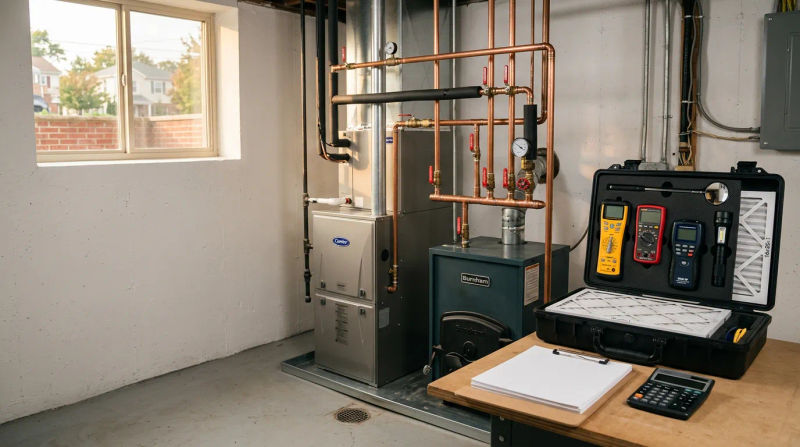
As a senior technician with over 15 years of experience working on heating systems here in Staten Island, I know that one of the first questions homeowners have is, "What's this going to cost?" It's a fair question, and my goal today is to give you a transparent, straightforward guide to budgeting for a fall furnace or boiler inspection. Understanding the costs and the factors that influence them helps you make smart decisions for your home and avoid surprises.
Especially here on the island, we often go from needing our air conditioners one week to firing up the heat the next. That first cold night in October is the worst time to discover a problem. That’s why we always advise homeowners to schedule their heating system check-ups in late summer or early September. It gives you peace of mind, better appointment availability, and plenty of time to handle any necessary repairs before you truly need the heat.
Average Costs in Staten Island
Let’s get right to the numbers. While every home and system is different, you can expect a professional heating inspection in Staten Island to fall within a general price range. These prices reflect a thorough, multi-point check performed by a trained and insured technician.
- Standard Furnace Inspection: For most gas furnaces, you can expect the furnace inspection cost to be between $99 and $250. This typically includes a comprehensive safety and performance check.
- Boiler Inspection: Boilers are more complex hydronic systems. A detailed boiler inspection quote Staten Island residents receive will usually range from $150 to $350. The process is more involved, including checks of water pressure, pumps, and expansion tanks, in addition to combustion and safety analysis.
A standard inspection from our organized crews includes a detailed checklist. We don’t just glance at the unit; we methodically test components. This includes:
- Checking the heat exchanger for cracks or stress, a critical safety step.
- Cleaning and inspecting the burners for proper ignition and flame.
- Testing safety controls and sensors, like the flame sensor and high-limit switch.
- Inspecting the flue and venting system for blockages or leaks.
- Checking electrical connections and testing voltage.
- For boilers, we also verify water pressure and check for leaks in the piping and valves.
This isn't just a tune-up; it's a crucial safety and performance evaluation to ensure your system is ready for winter.
Factors That Affect Price
Why the price range? Several factors influence the final Staten Island heating inspection pricing. When we create an estimate, we consider the specifics of your home and system.
1. System Type (Furnace vs. Boiler): As mentioned, boilers have more components than forced-air furnaces. The hydronic nature of a boiler system - with its water loops, circulator pumps, and pressure relief valves - requires more time and specialized knowledge to inspect properly. This is the primary reason for the difference in cost.
2. Age and Condition of the Unit: An older, poorly maintained system requires a more cautious and time-consuming inspection. Our technicians spend extra time looking for signs of fatigue, corrosion, or potential failure in older units. A 20-year-old furnace needs a much closer look at its heat exchanger than a 5-year-old model.
3. Building Era and Accessibility: In my years of service, I’ve worked in countless homes across Staten Island, including many of the classic post-war Cape Cods from the 1940s found in neighborhoods like Linden. These homes, while charming, can present unique challenges. The original construction might mean the furnace or boiler is in a tight crawlspace, a cluttered basement, or an attic with difficult access. Safely and thoroughly inspecting a unit in a cramped space simply takes more time and labor, which can affect the cost.
4. Scope of the Service: The base gas furnace safety check cost covers the inspection itself. If we find dirty components that need a deep cleaning beyond a simple wipe-down, or if a filter is clogged and needs replacing, those minor services may add to the total. We always discuss these findings with you before proceeding with any work that carries an additional charge.
5. Emergency vs. Scheduled Call: There is a significant cost difference between a pre-scheduled appointment in September and an emergency, no-heat call on a 30-degree night in November. Emergency service involves dispatching a technician immediately, often outside of normal business hours, and carries a premium rate.
How to Get the Best Value
Being cost-conscious doesn't mean cutting corners, especially on safety. It means being smart about how you schedule and manage your HVAC maintenance. Here are my top tips for getting the best value.
- Schedule Early: The single best thing you can do is book your inspection between August and mid-September. Our schedules are more open, and you avoid the panicked rush that happens during the first cold snap. This proactive approach is the easiest way to save money and stress.
- Join a Maintenance Plan: Most reputable HVAC companies, including our team at Cool Tech, offer annual service agreements. These plans typically include both a heating and cooling inspection, priority service if you need a repair, and often a discount on parts and labor. The upfront cost of the plan is almost always less than paying for two separate inspections à la carte.
- Bundle Services: If you’re due for both a heating and cooling check, ask about getting them done in the same visit. A technician is already on-site, so combining the services can sometimes result in a lower overall price.
- Keep the Area Clear: You can help make our job more efficient by ensuring the area around your furnace or boiler is clean and accessible. This reduces the time we have to spend preparing the workspace and allows us to focus entirely on the system itself.
Questions to Ask Your Contractor
When you call for a quote, don't just ask for the price. A professional company will be happy to answer questions that help you understand what you're paying for. As a technician, I appreciate an informed homeowner. Here’s what you should ask:
- "What specific tasks are on your inspection checklist?" This helps you compare apples to apples between different companies. A low price might mean a less thorough check.
- "Are your technicians certified and insured?" You want to ensure the person working on your gas or oil-fired appliance is a trained, qualified professional.
- "What happens if you find a problem during the inspection?" Understand their process. They should explain the issue clearly, provide a written quote for the repair, and wait for your approval before doing any work.
- "Do you provide a written report after the inspection?" A professional service includes documentation of what was checked, the system's condition, and any recommendations.
- "Can you provide a firm quote for the inspection before you start?" This avoids any surprises on the final bill.
An annual inspection is one of the most important investments you can make in your home's safety, comfort, and efficiency. It catches small issues before they become catastrophic failures, ensures safe operation, and keeps your system running at peak performance, which can even help lower your utility bills. Taking care of it before the heating season begins is the smartest, most cost-effective approach.
For a personalized estimate in Staten Island, contact Cool Tech hVAC Corp. for a free consultation. Our team is ready to help you prepare your home for a safe and comfortable winter.