
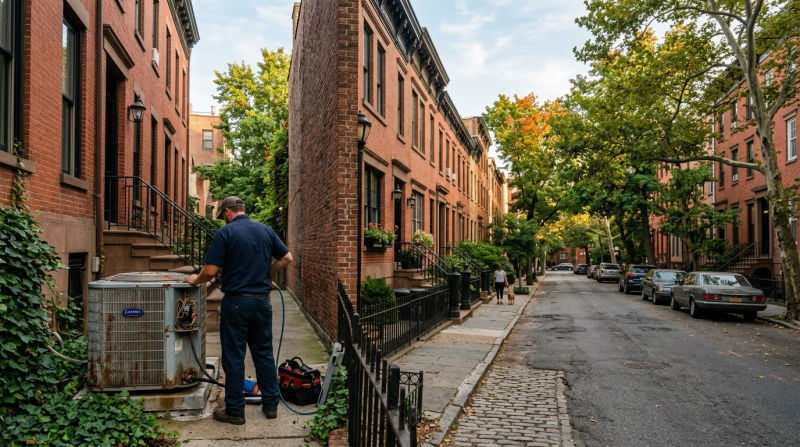
As a Senior HVAC Service Technician with over 15 years of experience working right here in Staten Island, I’ve seen firsthand how our unique island environment impacts home comfort systems. My name is Anthony DeLuca, and at Cool Tech hVAC Corp., we understand that living here is different from living in the other boroughs. While we enjoy the beautiful shorelines and coastal breezes, that same salt-laden air can be tough on your home's most expensive and essential equipment: your HVAC system. Many homeowners don't realize the extent of the damage until it’s too late, leading to premature system failure and costly replacements. That's why understanding and preventing corrosion is one of the most important things you can do to protect your investment.
Staten Island Weather Challenges
The biggest threat to your outdoor AC unit in Staten Island isn't just the summer heat; it's the air itself. Our proximity to the Atlantic Ocean and the New York Bay means the air is constantly filled with microscopic salt particles and high levels of moisture. This combination creates a perfect storm for accelerated corrosion.
Here’s what happens: The outdoor component of your air conditioner, the condenser unit, is made primarily of metal - copper tubing, aluminum fins, and a steel cabinet. When salt and moisture settle on these surfaces, they create an electrochemical reaction, essentially speeding up the rusting process. This is known as salt air condenser coil corrosion, and it's a major cause of system inefficiency and failure.
At Cool Tech hVAC Corp., we see this often in Staten Island, particularly in homes near the Verrazzano-Narrows Bridge or along the South Shore. The delicate aluminum fins on the condenser coil begin to crumble, restricting airflow. The copper tubing can develop microscopic pits and leaks, allowing refrigerant to escape. Even the electrical connections and fasteners aren't safe; we frequently find rusted terminals and seized screws that make repairs difficult and sometimes impossible. This persistent HVAC corrosion Staten Island residents face can shorten a system's lifespan by years if left unaddressed.
Best Practices for Local Homeowners
Protecting your system from our coastal climate requires a proactive approach. Waiting until you notice a problem often means significant damage has already occurred. As the intense heat of summer begins to fade in September, it’s the perfect time to give your system some much-needed attention. Here are some of the most effective coastal humidity HVAC maintenance tips our team recommends:
- Regularly Rinse Your Outdoor Unit: One of the simplest ways to protect outdoor AC unit Staten Island style is to gently rinse it with a garden hose. About once a month during the cooling season, spray down the outer casing and coils to wash away accumulated salt and debris. Be sure to turn off the power to the unit at the disconnect box first. Use a gentle spray; a high-pressure washer can easily bend the delicate fins.
- Ensure Proper Drainage: Make sure the area around your condenser is clear of leaves, mulch, and debris. The unit should be on a level pad that allows water to drain away freely. Standing water around the base of the unit will promote rust on the cabinet and internal components.
- Invest in Professional Maintenance: While rinsing helps, it can't replace a professional tune-up. Our technicians at Cool Tech hVAC Corp. perform a comprehensive cleaning using specialized, non-corrosive coil cleaners that safely remove grime that water alone can't. We also inspect all electrical components, check refrigerant levels, and can apply a professional-grade corrosion inhibitor spray. This transparent coating acts as a barrier between the metal components and the salty air, drastically slowing down the corrosion process.
- Consider a Sacrificial Anode: Similar to the zinc anodes used on boats, these small metal pucks can be installed on your HVAC unit. They are designed to corrode before the more critical components of your system do, essentially sacrificing themselves to protect your investment.
- When Replacing, Choose Wisely: If your system is nearing the end of its life, consider investing in a coastal-rated or corrosion-resistant model. These units are built with composite base pans, coated coils, and stainless steel components designed specifically for environments like ours.
Local Resources and References
While our professional services provide the most robust protection, your local hardware or home improvement store can be a good resource for basic maintenance supplies. You can find gentle hose nozzles and basic cleaning tools there. However, for specialized coil cleaners and protective coatings, it's best to rely on professional-grade products. Many consumer-grade chemicals can be too harsh and may cause more harm than good if not used correctly. The team at Cool Tech hVAC Corp. uses products and processes that are tested and proven to be safe and effective for the specific equipment we service, ensuring your manufacturer's warranty remains intact.
Choosing a Local Expert
When you need service, it's crucial to choose a company that truly understands the challenges of our island. A generic HVAC company might not recognize the early signs of salt air corrosion or have the right tools and products to combat it. You need a team with localized experience.
Look for a company whose technicians live and work in the area. Ask them specifically about their approach to preventing salt air condenser coil corrosion. Do they offer protective coatings? Do their maintenance plans include detailed inspection of coils and electrical connections for signs of rust and decay? An experienced local provider will have clear, confident answers.
Cool Tech hVAC Corp. has served Staten Island homeowners for years. Our standardized maintenance checklists are designed specifically with our coastal environment in mind. Our trained crews know exactly what to look for, from the subtle pitting on a copper line to the early signs of decay on a capacitor's terminals. We don't just fix problems; we work to prevent them, saving you money and stress in the long run.
Conclusion
Living in Staten Island offers a unique lifestyle, but it also brings unique responsibilities for homeowners. Protecting your HVAC system from the constant barrage of salt and humidity isn't a luxury - it's a necessity for ensuring long-term reliability and efficiency. By taking a few proactive steps and partnering with a knowledgeable local expert, you can significantly extend the life of your system and ensure your home remains comfortable year-round.
If you have concerns about corrosion or want to schedule a post-summer inspection to prepare your system for the seasons ahead, don't hesitate to reach out. When it comes to HVAC in Staten Island, the team at Cool Tech hVAC Corp. has the local expertise you can trust. Let us help you protect your investment.