
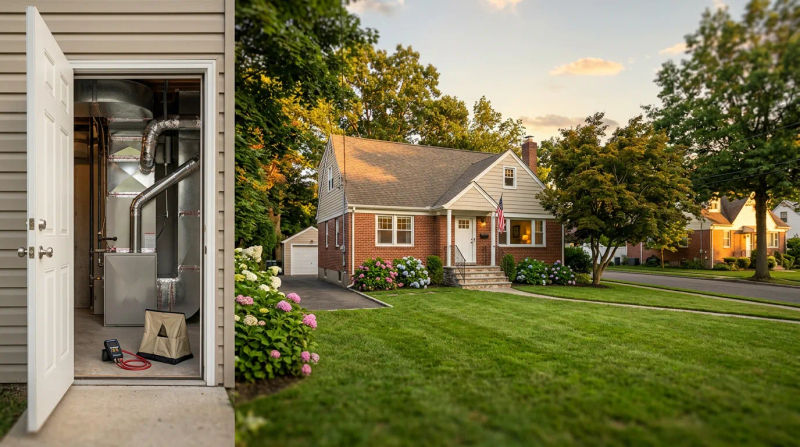
As a Senior Technician with Cool Tech hVAC Corp., I’ve seen it all when it comes to home comfort issues, especially here on Staten Island. But the call we received late last August was a classic. The homeowner was at his wit's end. “Anthony,” he said, “my thermostat is set to 72, my downstairs is an icebox, but my kids’ bedrooms upstairs are over 80 degrees. The AC runs constantly, and my bills are through the roof. Do I need a new, bigger unit?”
This is a story we hear all the time, a textbook case of the hot upstairs cold downstairs Staten Island problem. It’s especially common in the charming Cape Cod-style homes that dot our borough. These houses, often built in the mid-20th century, have unique architectural layouts that can create significant HVAC challenges over time. The problem becomes unbearable during those humid, late-summer heatwaves when families need a comfortable retreat the most.
I assured him that a bigger, more expensive unit was likely not the answer. More often than not, the issue isn't the power of the air conditioner; it's the effectiveness of the delivery system. I told him our team at Cool Tech hVAC Corp. specializes in diagnosing these exact situations, and we’d be happy to come out and perform a full system assessment to find the real root of the problem.
The Assessment
When my team and I arrived at the home, we started with a thorough, data-driven diagnostic process. Homeowners are often surprised that our first step isn't to look at the outdoor condenser. Instead, we head to the basement and break out our diagnostic tools. At Cool Tech hVAC Corp., we don't guess; we measure.
Our initial findings confirmed my suspicions:
- High Static Pressure: Using a digital manometer, we measured the static pressure within the duct system. The reading was significantly higher than the manufacturer's recommended level. This essentially means the system was “choking.” The blower motor was working incredibly hard to force air through a restrictive network of ducts, wasting energy and causing excessive strain on the equipment.
- Major Airflow Imbalance: We used a calibrated airflow hood to measure the volume of air, in cubic feet per minute (CFM), coming out of each supply register. The results were stark. The registers in the downstairs living room, located right next to the thermostat, were blasting out nearly 180 CFM each. Meanwhile, the two upstairs bedroom registers were barely pushing 60 CFM. The system was designed to deliver around 120-140 CFM to those rooms. No wonder they were hot!
- Significant Duct Leakage: During our visual inspection of the ductwork in the unfinished basement and tight attic crawlspace, the problem became even clearer. We could feel cold air blowing out of unsealed joints and poorly connected sections of ductwork. Decades-old duct tape was peeling away, and seams that were never properly sealed were leaking a substantial amount of conditioned air into unconditioned spaces. This meant a large percentage of the cool air the system was producing never even made it to the intended rooms.
The diagnosis was clear. The homeowner didn't need a new air conditioner. They needed a comprehensive uneven cooling fix that addressed the two core issues: leaky ducts and a completely unbalanced airflow distribution. The system was short-cycling - the thermostat downstairs was satisfied too quickly by the excessive cold air, shutting the system off before it ever had a chance to cool the distant, air-starved bedrooms upstairs.
Our Solution
Armed with concrete data, we presented our plan to the homeowner. We explained that by investing in targeted repairs, we could solve his comfort problems, lower his energy bills, and extend the life of his existing HVAC system. This is the kind of value and expertise Cool Tech hVAC Corp. is known for.
Our solution was a two-pronged approach, executed by our highly trained 3-person crew over the course of just two days.
Phase 1: Comprehensive Duct Sealing
First, we tackled the massive energy waste from duct leakage. This is a critical step for any duct sealing comfort improvement Staten Island project.
- Our technicians went through every accessible inch of the duct system in the basement and attic.
- We removed the old, failed tape and thoroughly cleaned the connection points.
- Using high-quality mastic sealant, a professional-grade gooey substance, we painted over every seam, joint, and connection in the ductwork. Unlike tape, mastic creates a permanent, flexible seal that won't dry out or peel away.
- For larger gaps and connections at the plenum, we used a combination of mastic and heavy-duty foil tape to ensure an airtight seal.
By sealing the ductwork, we ensured that nearly 100% of the air cooled by the AC unit was now staying within the system, ready to be delivered to the rooms where it was needed.
Phase 2: Professional Airflow Balancing
With the leaks plugged, it was time to direct the air properly. This is the art and science of our airflow balancing service Staten Island NY.
- We strategically installed manual balancing dampers in the main supply trunks leaving the furnace. One trunk fed the first floor, and the other fed the second floor.
- With the system running, we began the methodical process of adjustment. Using our airflow hood, we took readings at the registers upstairs and downstairs.
- We slightly closed the damper on the first-floor trunk line, which restricted some of the excess airflow going to the living room. This naturally redirected more air pressure and volume up the trunk line leading to the second floor.
- This process is iterative. We made small adjustments, went back and re-measured the CFM at each register, and repeated the process until we achieved the ideal airflow for every room. We dialed back the downstairs registers to their design specification and successfully boosted the upstairs registers to over 130 CFM each.
This meticulous, data-driven approach is a hallmark of the service provided by Cool Tech hVAC Corp. We don't stop until the numbers prove the problem is solved.
The Results
The transformation was immediate and dramatic. When we did our final walkthrough with the homeowner, the difference was something he could feel the moment he walked up the stairs.
- Whole-Home Comfort: The temperature differential between the first and second floors dropped from a miserable 8-10 degrees to a consistent 1-2 degrees. The upstairs bedrooms were finally cool and comfortable, even during the peak afternoon heat.
- Improved System Performance: With the duct leaks sealed and the static pressure reduced, the HVAC system could finally breathe. The blower motor ran smoother and quieter, and the air conditioner's cycle times became longer and more effective, allowing for better dehumidification and more even cooling. The homeowner immediately noticed how much less frequently the system was kicking on and off.
- Energy Savings and Value: We saved the homeowner thousands of dollars by avoiding an unnecessary and ineffective full system replacement. Furthermore, by sealing the significant duct leakage, we projected he would see a 15-20% reduction in his heating and cooling bills moving forward. The project paid for itself in comfort, peace of mind, and long-term energy savings.
The homeowner was ecstatic. He told us, “I can’t believe it. For the first time since we bought this house, we can actually use our entire home in the summer. Your team found a problem I didn’t even know I had and fixed it in two days. Thank you, Cool Tech hVAC Corp.!”
If your home suffers from hot and cold spots, don't assume you need a bigger HVAC unit. The problem might be hiding in your ductwork. A proper diagnosis and targeted repair can make all the difference.
Ready for your own Cool Tech hVAC Corp. experience? Contact us today for a free inspection.