
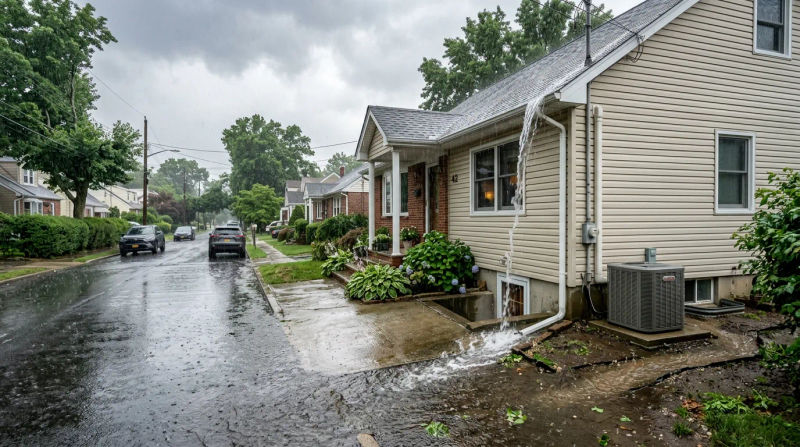
As a Senior HVAC Service Technician with over 15 years of experience right here in Staten Island, I've seen firsthand how our unique coastal weather can take a toll on home comfort systems. My name is Anthony DeLuca, and at Cool Tech hVAC Corp., my team and I spend our days helping homeowners navigate the specific challenges our borough presents. Every August, we brace for the same thing: intense, sudden downpours that can drop a lot of rain in a very short time. While a summer storm might seem harmless, it can trigger a chain reaction that starts at your roofline and ends with a call for an emergency HVAC repair. What's the culprit? More often than you’d think, it’s a simple case of gutter overflow HVAC damage.
Many homeowners don't realize the direct link between their gutters and the health of their heating and cooling equipment. When rainwater can't be channeled away from your home properly, it finds the path of least resistance - and that path often leads straight to your expensive HVAC components.
Staten Island Weather Challenges
Staten Island's climate is a story of contrasts. We enjoy beautiful waterfront views, but that proximity to the water brings challenges, especially during storm season. Unlike a gentle, steady rain, our late-summer storms are often fierce and fast. Gutters that might handle a normal shower are quickly overwhelmed, causing water to cascade over the sides like a waterfall.
This creates several distinct problems for your HVAC system:
- Direct Water Intrusion: The most obvious issue is rainwater splashing outdoor condenser units. Your outdoor AC unit is built to withstand rain, but it's not designed to handle a concentrated deluge pouring directly from the roof. This constant soaking can lead to premature corrosion of the condenser coils and fins, especially when combined with our salty coastal air. It can also short out electrical components like the contactor, capacitor, or fan motor, leading to a system that won't start.
- Foundation Saturation: When gutters overflow, water pools around your home's foundation. For many Staten Island homes, especially the older colonials and ranches found in neighborhoods from St. George to Tottenville, this is a major concern. The saturated ground raises the water table and can force moisture through foundation walls, leading to a significant spike in basement humidity after storms Staten Island homeowners know all too well.
- Hidden Interior Damage: That basement humidity doesn't just stay in the basement. Your HVAC system's return ducts will pull that damp, musty air into circulation. This introduces the risk of ductwork moisture Staten Island, creating a breeding ground for mold and mildew that can then be distributed throughout your entire home, severely impacting your indoor air quality.
At Cool Tech hVAC Corp., we see this often in Staten Island. A customer calls about a musty smell or a malfunctioning AC unit, and upon inspection, we trace the problem back to a clogged gutter located directly above their outdoor condenser.
Best Practices for Local Homeowners
Preventing water damage is far more cost-effective than repairing it. As a homeowner, you have a significant amount of control. Here are some best practices our team recommends to protect your investment.
1. Maintain Your Gutters and Downspouts
This is your first and most important line of defense. Clogged gutters are the primary cause of overflow.
- Regular Cleaning: Clean your gutters at least twice a year - once in late spring and again in late fall after the leaves have dropped. After a major storm, it's also wise to do a quick check for new debris.
- Check for Proper Pitch: Gutters should be sloped correctly toward the downspouts. If you see standing water in your gutters long after a storm, they may need to be adjusted.
- Ensure Downspouts are Clear and Extended: Make sure your downspouts are clear of blockages and that they extend at least 4-6 feet away from your foundation. This directs water away from your basement and the ground around your condenser.
2. Protect Your Outdoor Condenser Unit
Your outdoor unit is tough, but it's not invincible. A little strategic protection goes a long way.
- Install Splash Guards: If a downspout empties near your unit, a simple splash guard can redirect the flow of water away from the condenser.
- Check for Proper Clearance: Your unit should be installed on a level pad that raises it several inches off the ground. This prevents it from sitting in standing water. Ensure there's at least two feet of clearance around the unit for proper airflow and to prevent debris from trapping moisture against it.
- Consider a Condenser Cover (for Winter Only): In the off-season, a breathable cover can protect the unit from winter debris and moisture. Never operate the air conditioner with a cover on.
3. Control Basement and Crawlspace Humidity
If your basement feels damp after a storm, you need to address it before it affects your HVAC system and air quality.
- Invest in a Dehumidifier: A whole-home or standalone dehumidifier is one of the most effective tools for managing basement humidity after storms Staten Island. It helps protect the internal components of your furnace or air handler from rust and keeps your ductwork dry.
- Seal Foundation Cracks: Inspect your basement walls and floor for cracks where water might be seeping in and seal them with hydraulic cement or polyurethane caulk.
- Schedule a Ductwork Inspection: If you suspect you have ductwork moisture Staten Island, it's crucial to have a professional inspect it. The team at Cool Tech hVAC Corp. uses specialized tools to check for moisture and microbial growth inside your air ducts. Cleaning and sealing them can prevent serious air quality issues.
Local Resources and References
While our expertise is in HVAC, we understand that protecting your system is a team effort. If you notice significant issues with water management around your property, it's wise to consult with other local professionals. A reputable Staten Island roofer or gutter specialist can ensure your roof's drainage system is functioning optimally. For more serious grading or pooling issues in your yard, a local landscaper can help design solutions to channel water away from your home's foundation. For major changes to property drainage, it's also a good idea to check for any local regulations with the NYC Department of Buildings to ensure your project is compliant.
Choosing a Local Expert
When you suspect water has impacted your HVAC system, you need an expert who understands the specific interplay between our local weather and your home's mechanicals. A general technician might fix the immediate symptom - like a failed capacitor - but a local pro will investigate the root cause, like the overflowing gutter that caused the failure in the first place.
Cool Tech hVAC Corp. has served Staten Island homeowners for years, and our organized workflows are designed to diagnose problems thoroughly. Our trained technicians don't just look at the equipment; we look at the environment around it. We know the signs of corrosion caused by salty air and rainwater. We know how to test for hidden moisture in ductwork and how to assess an air handler for signs of water damage in a damp basement. This deep, localized knowledge is what separates a quick fix from a long-term solution.
As a technician, I can tell you that reliability and expertise matter. When our crew arrives, we have a standardized process to inspect, diagnose, and clearly explain the issue to you, ensuring you understand both the problem and the solution.
Your Local Partner in Home Comfort
Living on Staten Island means preparing for whatever the weather throws at us. Those sudden August storms are a part of life here, but they don't have to result in costly HVAC damage. By paying attention to your gutters and the path water takes around your property, you can protect your system and your peace of mind.
If you've noticed increased humidity, musty odors coming from your vents, or have an outdoor unit that's taking a beating from roof runoff, it's time to call in a local expert. When it comes to protecting your HVAC system from the unique challenges of our borough, the team at Cool Tech hVAC Corp. has the local experience and technical expertise you can rely on. Contact us today for a comprehensive system inspection.