
As a service technician with over 15 years of experience in New York, I've seen it all. But one of the most common calls we get, especially during the shoulder seasons like September, involves a peculiar and frustrating issue. You hear the familiar click and hum of your air conditioner turning on, but just a few minutes later, it clicks off. Then, a short while later, it repeats the process. This constant starting and stopping isn't just annoying; it's a critical symptom known as AC short cycling. While the cooler nights and warmer afternoons this time of year can make the problem more obvious, ignoring it can lead to premature system failure and expensive repairs down the road. This pattern of an AC turning on and off in New York homes is a clear signal that your system needs attention.
Common Signs and Symptoms
Short cycling is more than just an auditory nuisance. It presents several clear signs that your HVAC system is under stress. Recognizing these symptoms is the first step toward diagnosing the underlying issue. Our trained crews are taught to look for these specific indicators during a diagnostic visit.
- Frequent On/Off Cycles: The most obvious sign is the sound. A properly functioning AC should run for a consistent period (typically 15-20 minutes) to cool your space to the thermostat's set point. If your unit runs for less than 10 minutes, shuts off, and then quickly restarts, it's short cycling.
- Inconsistent Temperatures & Humidity: Does your home never seem to reach a stable, comfortable temperature? Short cycling is often the culprit. The system shuts down before it has a chance to distribute cool air evenly throughout the space, leading to hot and cold spots. Furthermore, a key function of your AC is dehumidification, which requires longer run times. A short-cycling unit won't effectively remove moisture, leaving your home feeling cool but clammy.
- Unexpectedly High Utility Bills: The startup phase of an air conditioner's cooling cycle consumes the most energy. When your system is constantly starting and stopping, it's repeatedly drawing that high initial burst of power. This inefficiency will show up as a noticeable spike in your monthly electricity bills.
- Premature Wear and Tear: This constant on-and-off action puts immense strain on the system's most critical components, particularly the compressor. The compressor is the heart of your AC, and it's not designed for rapid, repeated starts. These are clear HVAC compressor short cycling signs that can lead to its early demise - a repair that is often one of the most expensive.
What Causes This Problem
Understanding the short cycle air conditioner causes is key to finding the right solution. While the symptom is always the same, the root cause can vary significantly. In our experience, the issue usually falls into one of these categories.
- Restricted Airflow: This is, by far, the most common cause we encounter. Your HVAC system is a closed loop that relies on a constant, unobstructed flow of air. When that flow is blocked, the system can't operate as designed, causing internal pressure to build and safety switches to trip.
- Dirty Air Filter: A clogged filter is the number one offender. It essentially suffocates your system, forcing it to work harder until it overheats and shuts down.
- Blocked Vents and Registers: Furniture, rugs, or curtains covering supply or return air vents can have the same effect as a dirty filter.
- Iced Evaporator Coils: Restricted airflow prevents warm indoor air from passing over the evaporator coils. This can cause them to get too cold and freeze over, creating a block of ice that completely halts airflow and forces the system to shut down.
- An Oversized Air Conditioner: Bigger isn't always better when it comes to HVAC. If an AC unit is too powerful for the square footage it's meant to cool, it will blast the area with cold air so quickly that the thermostat is satisfied in just a few minutes. The system shuts off before it has had a chance to cool the entire home or properly dehumidify the air. This is a frequent issue in older New York properties, like the pre-1940s brick rowhouses and tenements common in many boroughs, where new systems may have been installed without a proper load calculation for the building's unique thermal properties.
- Low Refrigerant Levels: Your AC uses refrigerant to transfer heat out of your home. If the level is low, it's almost always due to a leak. When refrigerant is low, the pressure inside the system drops, which can trigger a low-pressure switch to turn off the compressor to prevent damage. Topping off refrigerant without fixing the leak is not a solution; a qualified professional must locate and repair the leak first.
- Thermostat Placement or Malfunction: A faulty thermostat can send incorrect signals to your HVAC system. More commonly, however, the problem is poor placement. If your thermostat is located in direct sunlight, near a heat-generating appliance, or directly in the path of a supply vent, it will get a false reading of the room's temperature and shut the system off prematurely.
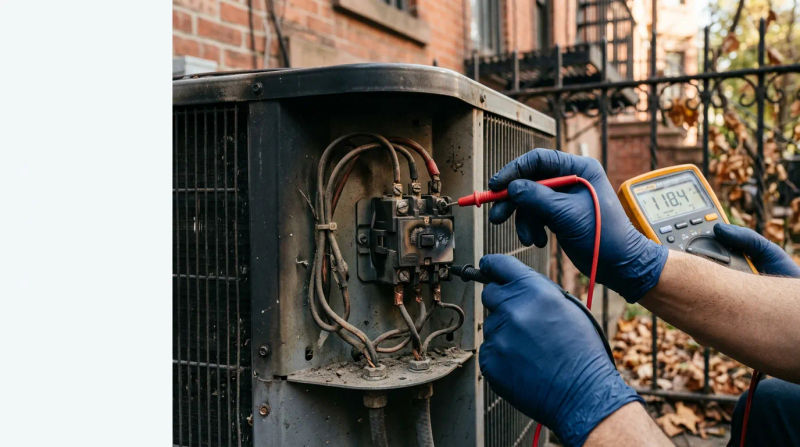
- Electrical Issues: Problems like a failing capacitor, corroded wiring, or a malfunctioning control board can interrupt power to the compressor, causing it to shut down unexpectedly. In dense urban areas, where many older buildings have aging electrical infrastructure, these issues can be more common.
When to Call a Professional
While some causes of AC short cycling have simple fixes, others require the expertise and tools of an experienced professional. Here’s how you can decide on your next steps.
Potential DIY Checks:
- Check Your Air Filter: First and foremost, inspect your air filter. If it's grey, dusty, or you can't see light through it, replace it immediately.
- Inspect Your Vents: Do a quick walkthrough of your home. Make sure all supply and return air vents are open and not blocked by furniture, drapes, or other items.
- Check Thermostat Settings: Ensure your thermostat is set to "Cool" and the temperature is set below the current room temperature. If it's a battery-powered model, try replacing the batteries.
If you've performed these checks and the short cycling continues, it's time to stop troubleshooting. Continuing to run a short-cycling AC risks severe damage, especially to the compressor. Problems like refrigerant leaks, iced-over coils, and electrical faults are not DIY jobs. They require specialized diagnostic equipment and licensed handling of materials like refrigerant.
Our technicians follow a standardized process to quickly and accurately diagnose the root cause, ensuring we fix the problem correctly the first time. An experienced professional can perform pressure tests, check electrical components, and evaluate the system as a whole to pinpoint the exact reason for the failure.
Conclusion
Short cycling is a critical warning from your air conditioner. It signals an underlying problem that is wasting energy, compromising your comfort, and putting your system on a path to premature failure. The most common causes are simple airflow restrictions, but more serious issues like an improperly sized unit or a refrigerant leak are also frequent culprits. Especially as we navigate the fluctuating temperatures of a New York September, addressing an AC turning on and off now is a smart move to ensure reliability and prevent a major breakdown before the heating season begins.
Don't wait for a minor annoyance to become a major expense. Pay attention to your system's behavior and take action at the first sign of trouble.
If you notice any of these signs, contact a local HVAC professional for an inspection.