
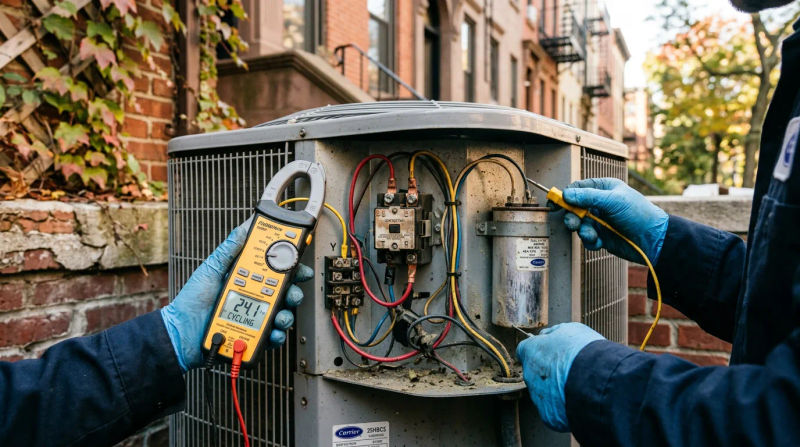
You’re settling in for a cool September evening in New York, enjoying the break from the summer heat. But then you hear it: the familiar click of your heat pump turning on, running for just a few minutes, and then clicking right back off. A short while later, the cycle repeats. This constant starting and stopping, known as short cycling, is more than just an annoyance. It’s a symptom that something isn't right with your HVAC system, and it’s a common issue our technicians see across the city, especially during the transitional fall season.
When your heat pump short cycles, it fails to complete a full heating or cooling cycle. This not only leads to inconsistent temperatures and higher energy bills but also puts significant strain on the system's components, potentially leading to premature failure. Understanding the signs and causes is the first step toward restoring comfort and efficiency to your home.
Common Signs and Symptoms
Recognizing heat pump short cycling is fairly straightforward once you know what to look and listen for. The most obvious sign is the unit turning on and off in rapid succession, often in cycles of less than ten minutes. This is a classic indicator that the system is not operating as designed. Here are a few other symptoms that often accompany this issue:
- Frequent On/Off Cycles: The system audibly starts and stops much more frequently than it used to. Instead of longer, smoother runs, you get short, ineffective bursts of activity.
- Uneven Temperatures: You might notice that some rooms feel comfortable while others are chilly or stuffy. Because the system shuts down prematurely, it doesn't have enough time to properly circulate conditioned air throughout the entire home, a common complaint in multi-level rowhouses or apartments with long layouts.
- Increased Energy Bills: A system that is constantly starting and stopping uses a significant amount of electricity. The startup phase is the most energy-intensive part of an HVAC cycle. If your heat pump turns on and off New York homes frequently, your utility costs can spike unexpectedly, even in mild weather.
- System Never Reaches Setpoint: You may find that despite the system running frequently, the indoor temperature never quite reaches the setting on your thermostat.
What Causes This Problem
The reasons behind short cycling can range from simple maintenance oversights to more complex system-wide problems. The unique architecture of New York, from pre-war apartments to modern condos, can often exacerbate these issues. Here are the most common short cycling causes HVAC system professionals encounter.
1. Restricted Airflow Your heat pump needs to “breathe” freely to work correctly. When airflow is obstructed, heat can build up within the system, causing it to overheat and shut down on a safety limit. This is one of the most frequent causes we diagnose.
- Dirty Air Filter: This is the number one culprit. A clogged filter starves your system of air, leading to a host of problems, including short cycling. We recommend checking your filter monthly.
- Blocked Vents and Registers: Furniture, rugs, or even curtains placed over supply or return vents can choke off airflow to certain parts of your home, creating a pressure imbalance that can cause the system to short cycle.
- Ductwork Problems: In many older New York buildings, like the pre-1940s brick rowhouses common in Brooklyn, ductwork can be long, complex, and hidden within walls and ceilings. Over time, these ducts can develop leaks, become disconnected, or even get crushed during renovations, severely impeding airflow.
2. An Oversized HVAC System When it comes to HVAC, bigger is not better. A heat pump that is too large for your space will heat the area around the thermostat very quickly. Once the thermostat is satisfied, it signals the system to shut down. However, because the run time was so short, the rest of the home hasn't been properly heated. This is a frequent issue in well-insulated apartments or in older homes that have had energy-efficiency upgrades like new windows, reducing the actual heating load.
3. Thermostat Issues Your thermostat is the brain of your HVAC system. If it’s giving faulty information, the system will behave erratically.
- Poor Placement: Is your thermostat located in direct sunlight, near a hot lamp, or next to a drafty window? Any of these can give it a false temperature reading, causing it to turn the system on or off at the wrong times.
- Faulty Unit: The thermostat itself could be malfunctioning, with a bad sensor or faulty wiring sending incorrect signals to the heat pump.
4. Refrigerant Leaks Your heat pump uses refrigerant to transfer heat. If the system develops a leak and refrigerant levels become too low, it can cause pressure sensors to trip and shut the unit down to protect the compressor. You might notice ice forming on the coils of the indoor or outdoor unit if you have a refrigerant leak. This is a serious issue that requires immediate professional attention.
5. Heat Pump Short Cycling in Fall Weather The shoulder seasons of fall and spring are prime time for short cycling. During a typical New York September, daytime temperatures can be mild while nights get chilly. The heating demand on your system is low. An oversized system or one with minor airflow restrictions might seem to work fine during a frigid January day, but these underlying problems are exposed when the system only needs to run for a few minutes to satisfy the low demand of a mild autumn day. This leads to the frustrating on-off-on-off cycle.
When to Call a Professional
Some causes of short cycling can be addressed with simple DIY checks, while others require the diagnostic tools and expertise of an experienced professional.
What you can check yourself:
- Inspect your air filter. If it’s dirty, replace it. This is the easiest and most important first step.
- Walk through your home and ensure all vents are open and not blocked by furniture or other items.
- Check your thermostat settings. Make sure it’s on the correct mode (heat) and has fresh batteries if it’s a battery-powered model.
- Look at your outdoor unit. Clear away any leaves, branches, or debris that might be crowding the unit and restricting airflow.
If you’ve performed these checks and the heat pump short cycling continues, it’s time to call for help. Our technicians use a standardized workflow to diagnose the root cause. This involves checking refrigerant pressures with calibrated gauges, testing electrical components like capacitors and contactors, and inspecting the full length of the duct system where accessible. These are tasks that should only be performed by a qualified professional due to the risks of high voltage and pressurized refrigerant.
Conclusion
Short cycling is a clear signal that your heat pump is working inefficiently and under stress. While it may seem like a minor issue during the mild fall, ignoring it can lead to costly repairs and uncomfortable days when winter truly arrives. By addressing the common causes - like restricted airflow, thermostat issues, or improper system sizing - you can improve your system's performance and extend its lifespan.
Don't wait for the problem to escalate. Taking proactive steps now ensures your system is reliable, efficient, and ready for the heating season ahead.
If you notice any of these signs, contact a local HVAC professional for an inspection.